AI-Assisted Mineral Prospecting: A Data-Centric Approach

AI-Assisted Mineral Prospecting: A Data-Centric Approach
8 December 2025
Introduction
Analyzing data from mineral exploration presents significant challenges due to its heterogeneity. We handle diverse data types, including tables, images, and text. Our primary objective is to leverage this vast information landscape to accurately pinpoint potential exploration targets. The initial, critical step is standardizing these diverse datasets, integrating them into a single platform for comprehensive visualization and utility scrutiny. The core challenge in developing AI models for mineral exploration lies in the data preparation—processing it efficiently so models can ingest it rapidly, without sacrificing critical information. To augment client-provided data, we integrate high-resolution hyperspectral imagery from satellites, introducing an extra dimension to our target identification capabilities.
Data Landscape
Data is the foundation of any exploration effort. The heterogeneity of our datasets is illustrated below, detailing the various data types we process:
Data Type | Format(s) |
|---|---|
Geochemical | Tabular, Images, Text |
Geophysical | Tabular, Images |
Geological | Tabular, Images, Text |
Satellite | Images |
Drilling | Tabular, Images, Text |
While tabular data remains the most common structured format, less structured data like images and text provide vital information on the spatial distribution of various features. A critical component shared across all these datasets is coordinate information. This feature enables us to fuse disparate datasets, facilitating advanced 2D and 3D visualization of the project areas.
Data Standardization and Pre-processing
The importance of data standardization cannot be overstated. This systematic process is designed to consolidate all datasets into a unified platform. From this platform, the data can be visualized and overlaid, offering crucial insights into potential mineralization targets. Moreover, this standardization ensures the datasets are readily consumable for building a variety of predictive AI models.
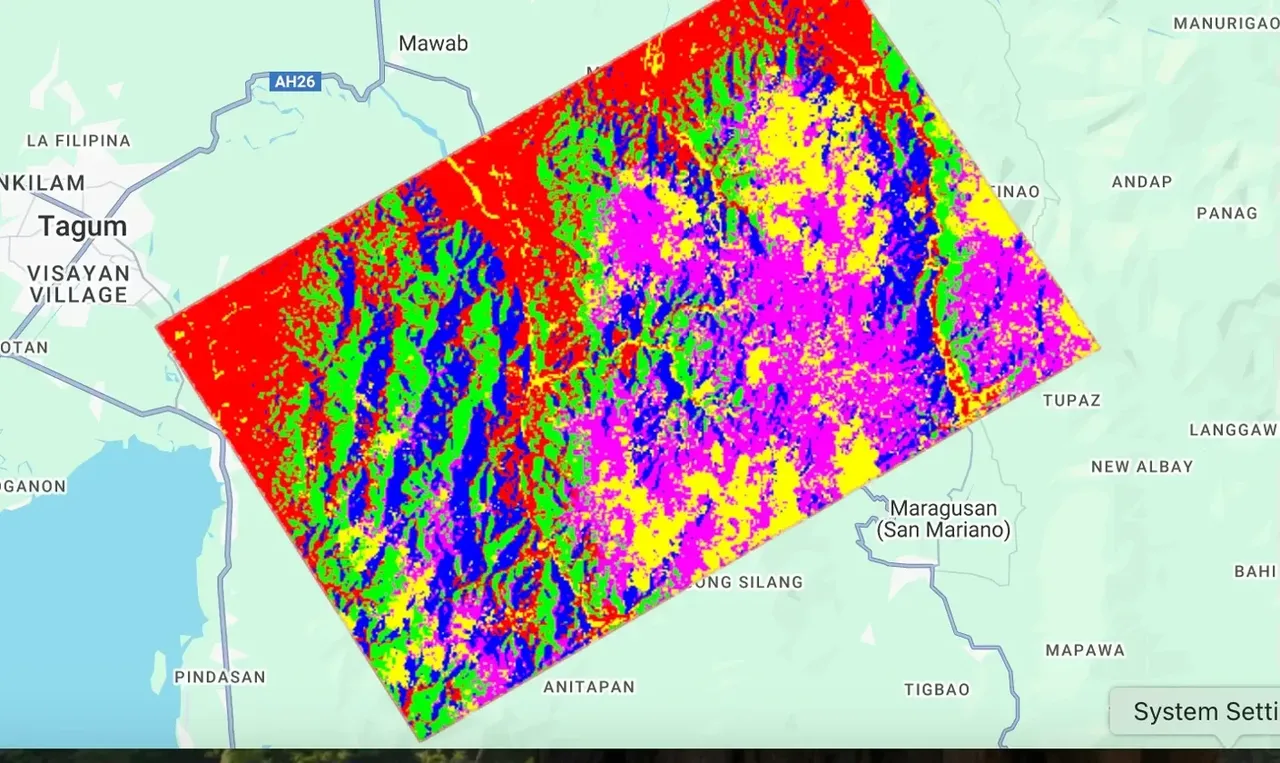
A key enhancement we introduce during this process is noise reduction. This step is essential for extracting and visualizing clear signals. We utilize several techniques, including smoothing methods and unsupervised learning (such as Principal Component Analysis and clustering), to enhance data quality and effectively combine multiple data components.
Developing Predictive Models
With the data consolidated in our unified analysis platform, we can then construct predictive models. Historical drill data is a "gold mine" of information, forming the predominant basis for our models. Our focus is specifically on mineral prospectivity mapping for Copper (Cu) and Gold (Au). A unique requirement for these models is understanding the 3D aspect of the prospecting process. We must not only pinpoint target areas on a map but also predict the potential depth at which deposits may occur. The heterogeneity of the collected datasets is instrumental in achieving this 3D prediction. However, the primary challenge remains the sparsity of "truth" data—the drill samples. Therefore, our models are designed to infer the probable distribution of Cu/Au concentrations from this sparse data, aided by various ground-penetrating geophysical datasets.
Enhanced Visualization Tools
Our visualization tools are specifically engineered to augment a geologist’s ability to prospect high-probability regions at speed and scale. Visualization provides the added advantage of "seeing" the raw data alongside the model predictions. Furthermore, we treat this visualization layer as an active feedback loop, continuously enhancing our ability to build more accurate predictive models.
Conclusion
In essence, AI-assisted mineral prospecting is fundamentally about deriving meaningful insights from a wealth of heterogeneous datasets. "Connecting the dots" involves first integrating all data into a single platform, then deploying AI models to identify anomalous regions with a high probability of containing mineral deposits. Our vision is to make this entire process repeatable and highly scalable, while keeping the geologist's invaluable intuition ingrained within our algorithmic framework.